EuroQSS: Universal European Quantum Software Stack

Europe's Software Infrastructure for Quantum Computing

The EU project EuroQSS is developing an open, interoperable, and hardware-independent quantum software stack. It simplifies access to quantum resources and enables efficient collaboration between classical and quantum-based computing methods. Through EuroQSS, Europe is strengthening its technological sovereignty in the field of quantum computing and laying an important foundation for transferring of this technology to industrial applications.
EuroQSS: facts and figures

Universal European Quantum Software Stack


Project duration:
 36 months,
October 2026 – September 2029
 

Total budget: 4.9 million euros
 

Consortium leader: PD Dr. habil. Jeanette Miriam Lorenz (Fraunhofer IKS)

Project partner

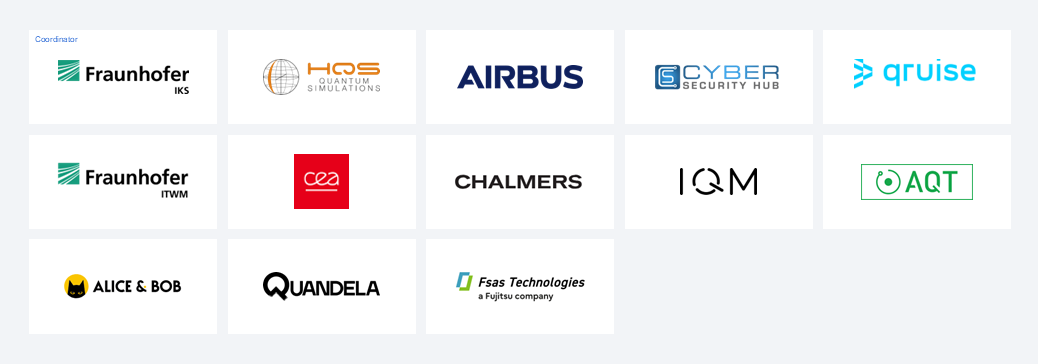
Expertise from 7 European countries:

  • Fraunhofer IKS und Fraunhofer ITWM (Germany)
  • Qruise SAS (France)
  • Alpine Quantum Technologies GmbH (Austria)
  • Fsas Technologies S. L. (Spain)
  • Alice & Bob (France)
  • CEA (France)
  • Chalmers (Sweden)
  • Airbus (Germany and France)
  • CyberSecurityHub (Czech Republic)
  • Quandela (France)
  • HQS Quantum Simulations GmbH (Germany)
  • IQM Finland (Finland)

Project goal

EuroQSS is developing a universal, open, and interoperable quantum software stack. This stack will make it easier to translate research findings into robust hybrid applications. It will also provide businesses with more predictable access to quantum computing.
 

More about the project


News & events

You can find press releases, events, and other news about EuroQSS here:
 

News & events

Project consortium

Thirteen partners from the fields of research, software development, quantum hardware, and the application industry are pooling their expertise and building on existing European initiatives as well as EuroHPC centers.

This project is funded by the European Union under @HorizonEU research and innovation program.


Views and opinions expressed are however those of the author(s) only and do not necessarily reflect those of the European Union or the European Commission. Neither the European Union nor the granting authority can be held responsible for them.